
The holidays can be beautiful. They can also mess you up.

Not because anyone’s doing anything wrong. It’s just that families carry history. Old roles show up. Old patterns get triggered. And suddenly you’re 45 years old feeling like you’re 12 again, caught in the same emotional loop you swore you’d outgrown.
When you and your parent have different attachment styles, especially anxious and avoidant, the holidays make it worse. One of you wants closeness. The other needs breathing room. One reaches out. The other pulls back. And this season that’s supposed to feel warm and connected? It can turn tense, confusing, or flat-out exhausting pretty fast.
But it doesn’t have to go that way this year.
Let’s talk about how these dynamics actually show up, and what you can do about them.
When the Adult Child Is Anxious and the Parent Is Avoidant
This happens all the time.
You want connection, reassurance, emotional presence. Especially around the holidays. But your avoidant parent shows love through doing things, not talking about feelings. They keep conversations light. They seem distant. They avoid anything heavy or just sort of check out during family stuff.
So, you end up feeling abandoned, invisible, like you’re too much. You notice every shift in their tone, every moment they turn away.
Meanwhile, your parent’s probably feeling overwhelmed, pressured, unsure what you even want from them. Worried they’ll disappoint you no matter what they do.
Here’s what helps:
Give their nervous system some room. Avoidant parents don’t respond well to pressure. They respond to space. That doesn’t mean you stuff down your needs. It just means pacing matters.
Ask for one specific thing, not everything. Instead of hoping they’ll magically get it, try: “It’d mean a lot if we could grab coffee for 20 minutes this week.” Clear, simple requests are way easier for them to handle.
Don’t mistake emotional quiet for not caring. A lot of avoidant parents feel things deeply. They just express it differently. Often way more than they’ll ever say.
Regulate yourself first. When you’re calmer, connection gets easier for both of you.
When the Adult Child Is Avoidant and the Parent Is Anxious
This brings a whole different kind of holiday stress.
Your anxious parent wants closeness, detailed plans, reassurance, long talks, emotional sharing. They want traditions to stay the same and proof that you’re all still close.
You want flexibility, downtime, space. Shorter visits. Less pressure. No heavy conversations.
Neither of you is wrong. You’re both just trying to feel safe.
Here’s how to bridge that gap:
Tell them what to expect. Avoidant folks think silence equals peace. But to an anxious parent? Silence is torture.
Try this: “I’ll get there around 3:00 and stay through dinner.” Knowing what’s happening is a gift to them.
Give small doses of real connection. You don’t have to share everything. But offering a few actual moments goes a long way.
When you need space, say it gently. “I’m gonna take a break, then let’s catch up in an hour.” This keeps them from spiraling into self-blame or panic.
You can protect your limits without abandoning the relationship. Anxious parents don’t need you there constantly. They need consistent signals that you still care.
When You’re Both Stuck in Old Roles
The holidays drag the past right into the present.
Your parent might unconsciously see you as the kid who needed them years ago. You might slip back into wanting something they never gave. And you’re both carrying expectations nobody’s actually said out loud.
Simple truth: You’re two adults now. You get to do this differently.
Try this conversation — keep it short and warm:
The “Holiday Partnership Talk”
1. What helps each of you feel connected? A walk together, sharing a meal, sitting nearby, one real conversation.
2. What helps each of you feel calm? Having space, breaks from the crowd, shorter visits, knowing the plan.
3. What’s one thing you’ll each practice this year? Anxious person: ask directly instead of hinting. Avoidant person: offer small signs you’re present.
This alone can change everything.
You’re Not Repeating the Past – You’re Rewriting It
Holidays with family pull us into emotional patterns we never signed up for. But once you see what’s happening? Everything shifts.
You’re not the child you used to be. Your parent’s not the same person either. You’re two humans doing your best with the nervous systems life gave you.
You can absolutely create holidays built on clarity, compassion, healthy distance, real closeness, and respect for each other’s limits.
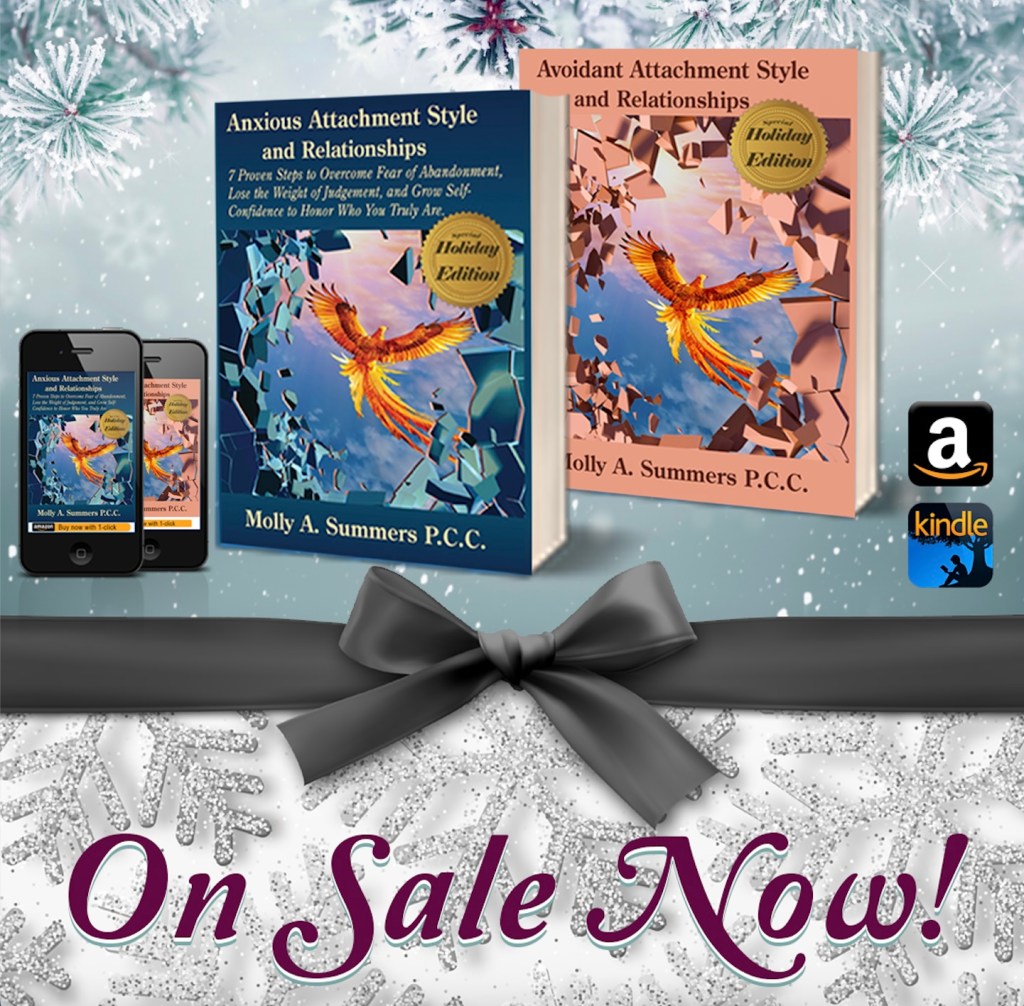
This is what I dig into in my two special holiday editions:
📘 Avoidant Attachment Style and Relationships — Special Holiday Edition 📕 Anxious Attachment Style and Relationships — Special Holiday Edition
Both books help you understand your patterns, regulate your emotions, and build more secure relationships during one of the trickiest times of year.
Your attachment style isn’t blocking connection. It’s a language. And the holidays give you a chance to understand that language better, and use it with more grace, honesty, and self-trust.
Warmly,
Molly A. Summers, P.C.C.
Life Coach & Author
Thank you for spending this time with me inside The Attachment Style Journal.
I hope these words remind you that your attachment style is not your whole story — and you don’t have to navigate change alone.
If you’d like more gentle support, my virtual coaching and self-guided book are here for you anytime.
Schedule your free call or explore my books at coachingwithmollysummers.com.
 Coaching with Molly Summers
Leave a comment