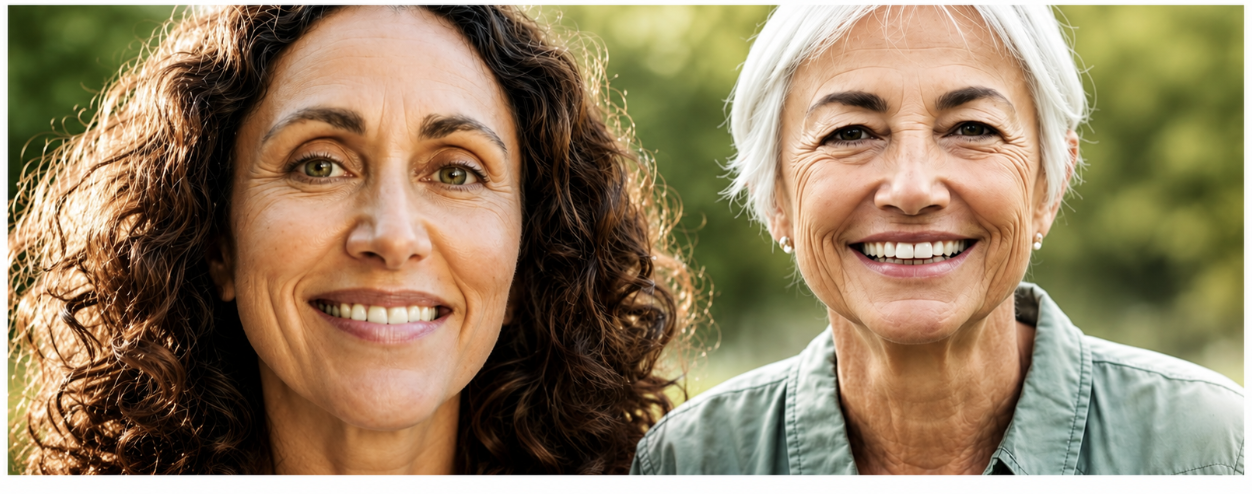
As a coach, I have the privilege of sitting with women in very different seasons of life. Recently, I noticed something that stopped me in my tracks.
Several of my clients are women in their 40s and 50s. They are professionals, bright, capable, and accomplished in their fields. Yet despite their competence, they often find themselves consumed by worry about what tomorrow might bring.
Several of my other clients are women in their 70s. They have lived full lives, weathered hardships, raised families, built careers, and survived losses that once seemed impossible to endure. Yet many of them struggle with something entirely different. They find it difficult to relax. They have trouble believing they have earned the right to slow down and simply enjoy this stage of life.
At first glance, these concerns seem unrelated. But after years of coaching and studying human behavior, I believe they are connected by a common thread: our relationship with control, purpose, and identity.
The Weight of the Future
Women in their 40s and 50s are often standing in the busiest intersection of their lives.
Many are balancing demanding careers while raising children or helping launch young adults into adulthood. They may also be caring for aging parents, managing relationships, navigating financial pressures, and experiencing the hormonal shifts of perimenopause or menopause.
It is no wonder their minds become future-focused.
The internal dialogue often sounds like this:
“If I make one wrong decision, everything could unravel.”
Notice that the anxiety isn’t necessarily about tomorrow itself.
It’s about responsibility.
Many women feel responsible not only for their own future, but for everyone else’s as well.
As professionals, this responsibility is often magnified. Their roles train them to anticipate problems before they occur. That vigilance is invaluable at work, but exhausting when it follows them home.
A Coaching Question for Women in Their 40s and 50s
When I hear this kind of anxiety, I don’t immediately begin solving problems. Instead, I become curious.
I often ask:
“What are you trying to prevent by worrying about tomorrow?”
That simple question gently shifts the conversation.
Very often, the answer isn’t about tomorrow at all. It reveals a deeper belief:
“If I worry enough, maybe I can prevent pain.”
Of course, none of us can.
Life has never offered that guarantee.
The goal of coaching is not to eliminate uncertainty. It is to help someone develop confidence that they can navigate uncertainty when it arrives.
The Gift of Perspective
Women in their 70s have accumulated something younger women simply cannot possess yet:
Evidence.
Evidence that they have survived.
They have weathered illnesses. Financial setbacks. Broken relationships. The loss of parents. The loss of siblings. The loss of spouses. Sometimes even the unimaginable loss of a child.
They have lived through experiences they once thought might break them, and somehow, they kept going.
Psychologist Laura Carstensen, founder of Socioemotional Selectivity Theory, discovered something fascinating. As people become more aware that time is finite, their priorities naturally begin to shift.
Instead of asking,
“How do I build the biggest future?”
they begin asking,
“How do I make today emotionally meaningful?”
Rather than chasing achievement, many older adults place greater value on connection, purpose, gratitude, and emotionally fulfilling experiences.
Researchers have also identified what is known as the Positivity Effect. As we age, many people naturally become more attentive to positive experiences and emotionally meaningful moments than to negative ones. This doesn’t mean life’s challenges disappear. It means the brain gradually becomes more selective about where it places its attention.
What a beautiful gift perspective can become.
But Why Can’t So Many Women Relax?
Here’s what I find especially interesting.
Many women in their 70s intellectually know they have worked hard.
They know they have raised families, sacrificed for others, and met life’s responsibilities.
Yet emotionally, they still struggle to give themselves permission to rest.
Why?
Because for decades, their identity has often been built around being:
- Responsible
- Productive
- Needed
- Dependable
- Self-sacrificing
When those roles begin to change, an uncomfortable question quietly emerges:
“If I’m no longer taking care of everyone else, who am I?”
The challenge is no longer managing the future.
The challenge is believing they are worthy even when they are not accomplishing something.
A Coaching Question for Women in Their 70s
When I hear this struggle, I ask a very different question.
“If your worth were no longer measured by what you accomplish, who would you be?”
That question usually creates silence.
Not because there isn’t an answer.
Because it may be the first time someone has ever considered separating their identity from their productivity.
Over time, that question opens the door to a new possibility, that perhaps this chapter of life was never intended to be about proving their worth, but about finally experiencing it.
Different Decades. Different Questions.
Women in their 40s and 50s often ask:
“How do I control my future?”
Women in their 70s often ask:
“How do I finally give myself permission?”
Different questions. Different life stages. Yet both are searching for the same thing.
Warmly,
Molly A. Summers, P.C.C.
Life Coach, Author & Workforce Development Coach
Thank you for spending this time with me inside Journal for Focus, Feelings & Follow-Through
If you’d like more gentle support, my virtual coaching is here for you anytime.
Schedule your free call or explore my books at coachingwithmollysummers.com.
Leave a Reply